



ESG software is shifting from reporting to operational infrastructure
2025 was the year sustainability procurement became materially harder.
Budgets tightened. Buying cycles slowed. And companies stopped funding ESG initiatives that could not clearly connect to finance, assurance, and operational decision-making.
That shift defines what ESG software must deliver next.
The real question is no longer whether ESG remains relevant in 2026, but which ESG software survives when sustainability moves from reporting to execution.
ESG software is no longer a single market
We are no longer operating in a single ESG software market. Instead, we can observe fragmentation into multiple segments, each driven by different buyer priorities.
Compliance-first ESG reporting tools continue to face pressure, particularly where ROI is difficult to demonstrate once regulatory timelines shift. Many organizations have learned that producing a compliant report is not the same as managing ESG risk.
At the same time, demand is accelerating for ESG software that supports:
- Scope 3 data management
- Audit trails and assurance readiness
- Climate and transition risk analysis
- And critically, Double Materiality Assessment (DMA)
DMA has become a defining requirement under CSRD, but buyers are clear in meetings: they are not looking for a one-off assessment exercise. They need software that embeds DMA into governance, data ownership, and decision-making.
This shift is increasingly reinforced by independent market analysis. Gartner’s 2025/2026 Market Guide for ESG Reporting reinforces this shift. Its analysis makes clear that audit-ready ESG software with traceable proof and defensible audit trails will outlast reporting-only dashboards as regulatory scrutiny and assurance requirements intensify. Gartner’s broader technology outlook for 2026 signals the end of experimental ESG tools, favouring integrated systems that can survive both regulatory review and budget pressure.
This is where ESG software begins to function as Operational Infrastructure, not a reporting layer.
The geographic center of ESG software demand is shifting
Europe has led ESG software adoption for years, driven largely by regulation such as CSRD and ESRS. However, as policy momentum softens and implementation timelines extend, growth is likely to rotate toward faster-moving markets.
Asia and the Middle East are emerging as key regions for ESG software demand. In these markets, decarbonization targets, industrial policy, and infrastructure investment are translating into concrete implementation needs. Companies are not looking for aspirational ESG tools. They are looking for ESG software that can be implemented, governed, and defended under audit.
.png)
This reinforces a broader reality: ESG software is increasingly evaluated as operational infrastructure, not as a reporting add-on.
What will differentiate ESG software in 2026
In 2026, the strongest ESG software providers will not be those with the loudest AI claims. They will be the ones that reduce friction in real business workflows.
This is not just a theoretical shift. External data increasingly confirms what buyers are already signalling in practice. According to IDC, by 2026, 70% of organizations that successfully integrate planning and execution will achieve measurable operational efficiency gains, resulting in improved ESG and financial performance. The implication is clear: ESG outcomes improve when sustainability data is embedded into operational decision-making, not when it is isolated in reporting workflows.
In an environment of constrained budgets, automation only matters if ESG software delivers measurable outcomes. Fewer manual corrections. Faster reporting cycles. Clear data ownership. Stronger defensibility during assurance and audit processes. These are the criteria buyers are using to evaluate ESG software today.
From ESG reporting tools to decision-grade ESG software
This shift is already visible across the market. Companies are moving away from ESG software designed solely for compliance and toward integrated, decision-grade ESG platforms.
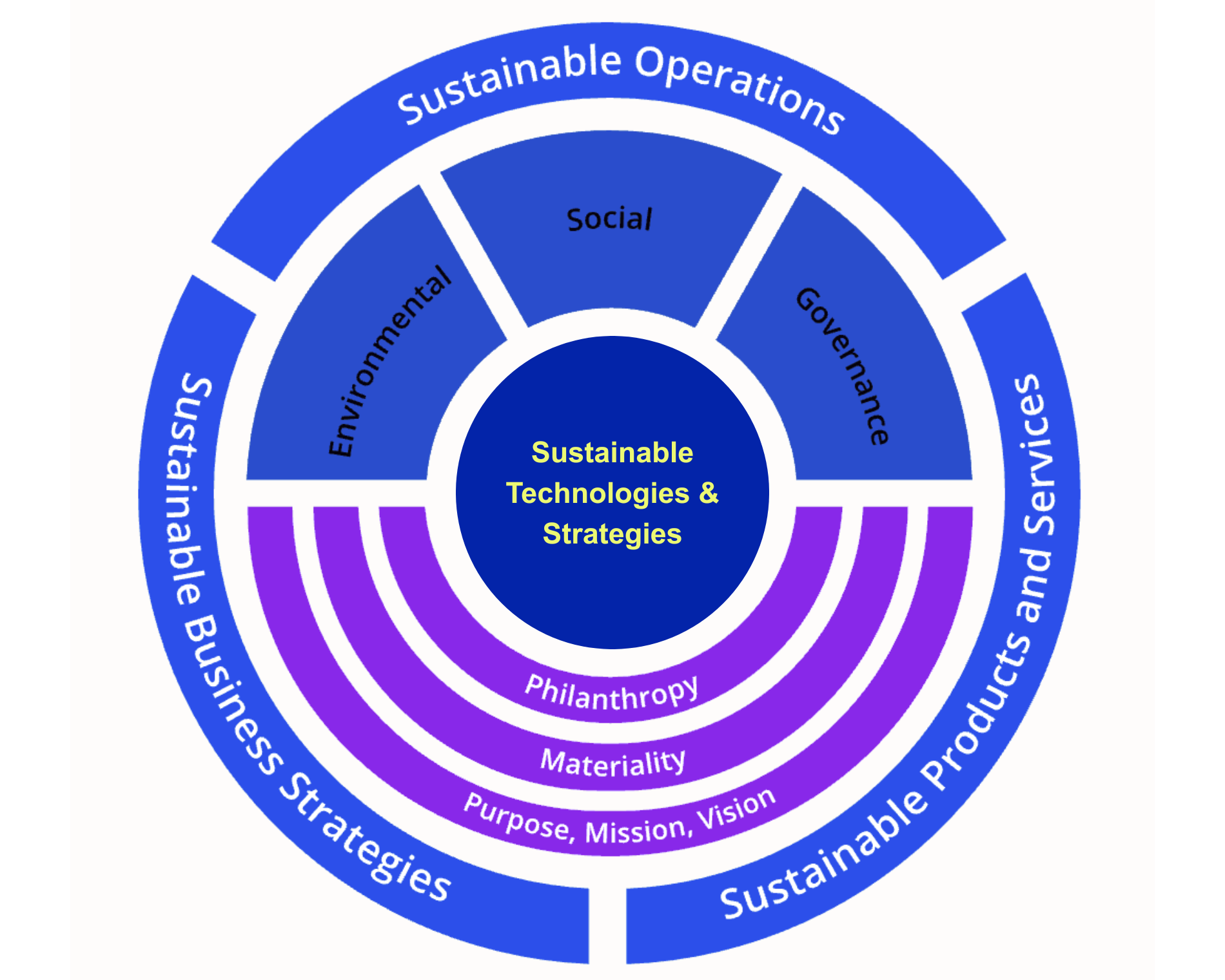
Instead of asking whether ESG software can generate a sustainability report, organizations are asking whether it connects ESG data to financial planning, procurement decisions, risk management, and operational controls. ESG is no longer treated as a parallel process. It is becoming embedded in how companies manage risk, allocate capital, and demonstrate credibility.
To make this concrete, here is the informal checklist we increasingly see buyers apply when evaluating ESG software:
- Does the software support ongoing Double Materiality Assessment (DMA)?
- Are assumptions, thresholds, and scoring logic documented and auditable?
- Can ESG data be reconciled with financial and operational systems?
- Is data ownership clear across functions?
- Can we monitor all existing sites grouped and individually?
- Can we explain and defend outcomes to auditors, regulators, and management?
If the answer to these questions is unclear, the software rarely survives budget scrutiny.
Consolidation as a necessity, not a trend
As expectations rise, consolidation in the ESG software market will accelerate. Not as a headline trend, but as a necessity.
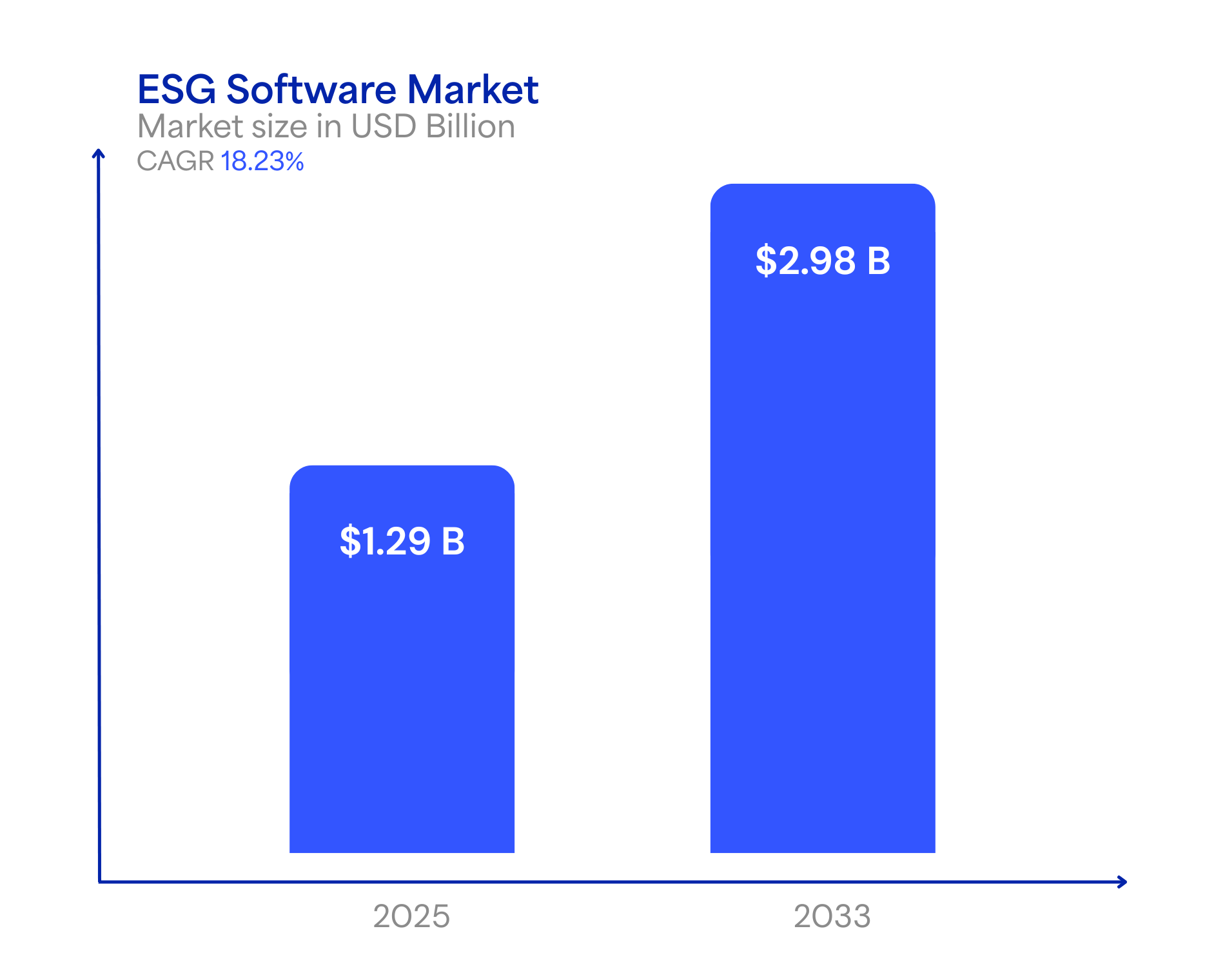
Companies are increasingly unwilling to maintain multiple disconnected ESG tools for data collection, reporting, supplier engagement, and assurance. They want fewer ESG software vendors, deeper integrations, clearer accountability, and implementation support that drives adoption. This favors ESG software platforms that can operate across functions and scale with organizational complexity, while placing pressure on narrow point solutions.
What ESG software must prove going forward
No one has a crystal ball. The ESG software market is shaped by regulatory change, geopolitical uncertainty, and rapid technological development.
What is not in dispute is the direction of travel. The transition to a sustainable economy is moving from ambition to execution. And as that transition matures, the market will continue to reward ESG software that works quietly, reliably, and at scale.
The era of 'experimental' ESG software is over. As we move through 2026, the question for leadership is simple: Does your sustainability data stay in a dashboard, or does it drive your business? At denxpert, we’re building for the latter.


.png)


.png)
.png)