


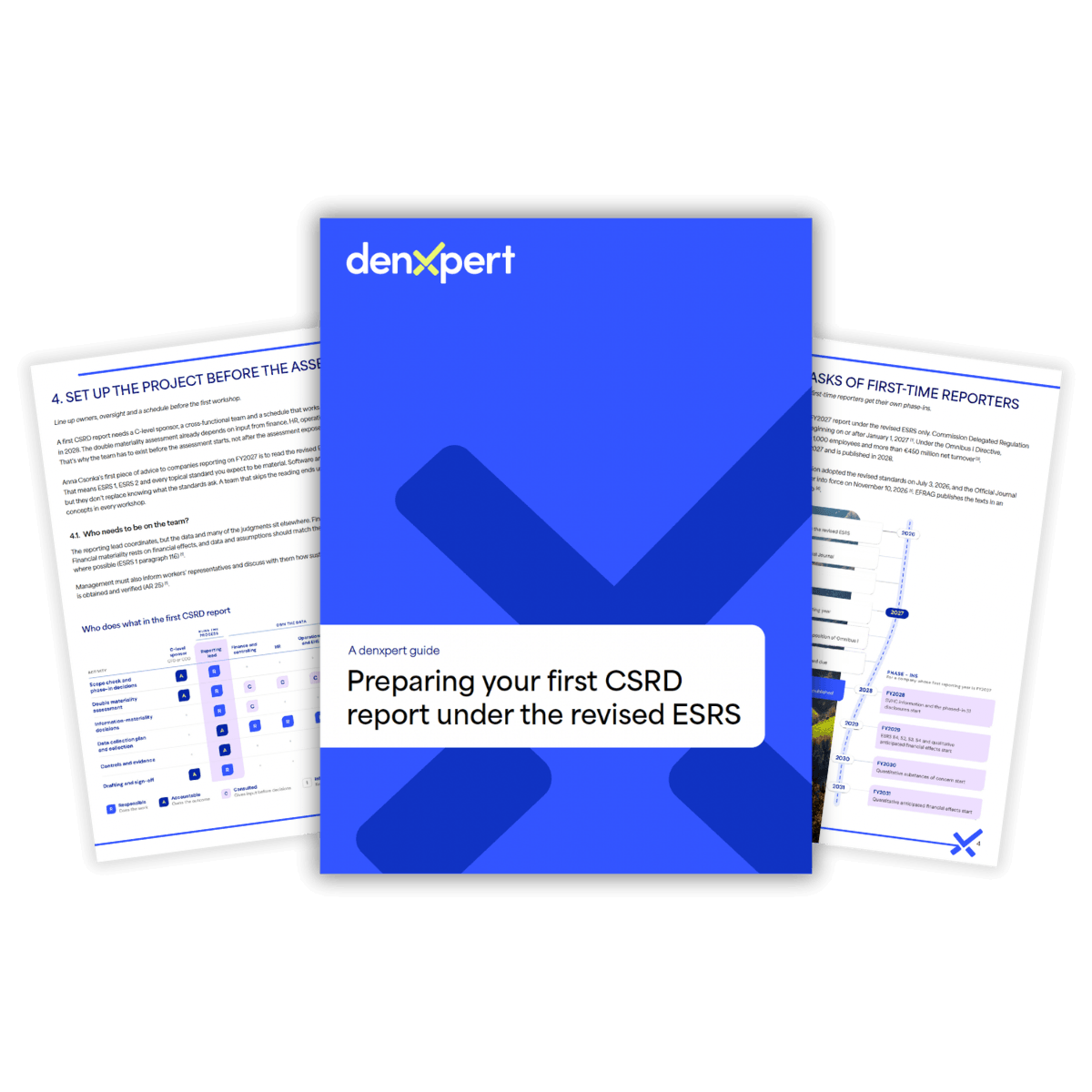







Your first CSRD report under the revised ESRS: a step-by-step guide for FY2027
Your first CSRD report covers FY2027, and the data for it starts on January 1, 2027. This guide shows sustainability and reporting leads how to set up the process under the revised ESRS, from scope and phase-ins to a documented double materiality assessment, data collection and assurance readiness. It builds on our Revised ESRS Explained webinar with Anna Csonka.
What's inside
- How to confirm whether Omnibus I puts you in scope, and which disclosures you can phase in
- What the datapoint cut changes for your workload, and what it doesn't
- How to staff and schedule the project in Q4 2026
- How to run a top-down double materiality assessment an assurance provider can follow
- How to decide what to report on each material topic, and record what you leave out
- How to have data collection with owners, sources and evidence running on January 1, 2027
- What your assurance provider will ask for, and three records that answer it
Who it's for
Sustainability managers and CSRD reporting leads at EU companies reporting for the first time on FY2027, and the finance, HR and EHS colleagues who support them.
One finding from the guide
The European Commission says the revised ESRS cut mandatory datapoints by more than 60%, but expects reporting costs to fall by more than 30% per company (European Commission, July 2026). Most quantitative metrics, the double materiality assessment and limited assurance remain.
Seven chapters, an 18-item checklist and templates for the DMA record, the data collection plan and the relief register.
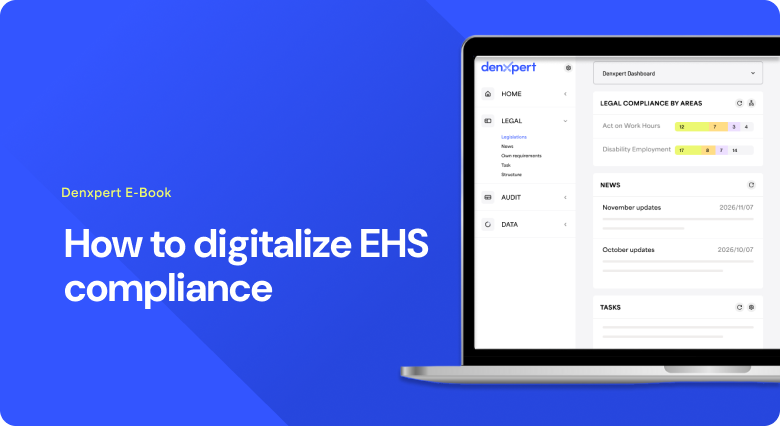
Want to see where the data plan lives? Explore CSRD Compliance and Sustainability Data & Reports Management.
Frequently asked questions
Do the revised ESRS apply to a first CSRD report for FY2027?
Yes. Commission Delegated Regulation (EU) 2026/1563 applies to financial years beginning on or after January 1, 2027, so a first report on FY2027 uses the revised ESRS only. The regulation was published in the Official Journal on September 21, 2026 and enters into force on November 10, 2026.
Which companies report on FY2027 after Omnibus I?
EU companies with more than 1,000 employees and more than €450 million net turnover are in scope, as confirmed in the Council's final approval of Omnibus I. Both thresholds must be exceeded. Because the CSRD is a directive, the obligation comes through national law, so check how your country has transposed the changes.
Can first-time reporters skip biodiversity or value chain standards in year one?
They can postpone them. Under paragraph 127 of the revised ESRS, companies reporting for the first time may omit ESRS E4, S2, S3 and S4 for their first two financial years. If those topics are material, they still disclose that and briefly describe the related policies, actions, targets and metrics.
Is the double materiality assessment still required under the revised ESRS?
Yes. Double materiality remains the basis for deciding what to report. What's new is that a company can conclude on a topic top-down, from its strategy, business model and value chain, and assess individual impacts, risks and opportunities only where the answer isn't evident (ESRS 1 paragraph 27). The DMA Generator gives that top-down step a structured first draft.
Can we still ask suppliers for sustainability data under the value chain cap?
Yes, within limits. From FY2027, CSRD reporters can't require more from value chain companies with up to 1,000 employees than the datapoints in Annex II of Delegated Regulation (EU) 2026/1560. For most value chain metrics, the revised ESRS also allow estimates such as sector averages or spend-based data, as long as you disclose them.

.png)






.jpg)


